BRIDGE BETWEEN WORLDS
The chronicle of art-craft can be viewed as a see-saw between the urge to copy and the itch to innovate. It is obvious that we are now far removed from the former. Instead of relating to external facts, visible for all to see, artists today prefer to retreat inwards and conduct specialized dialogues with each other, commenting not on their attitudes to reality, but on their relation to the spirit of art itself. Hence the somewhat reclusive nature of much present day art works, which err by chasing the swing of pendulum with zeal – total abstraction, for instance. Thereby failing to realize that though their efforts are of interest, they are limited to a small number of the community. Of course, excessive naturalism is equally limiting.
On all evidence Vandana is trying to steer clear of excess either way. Images from the Indian past revisit the painter’s otherwise contemporary idiom. The past, in especial that wh...
BRIDGE BETWEEN WORLDS
The chronicle of art-craft can be viewed as a see-saw between the urge to copy and the itch to innovate. It is obvious that we are now far removed from the former. Instead of relating to external facts, visible for all to see, artists today prefer to retreat inwards and conduct specialized dialogues with each other, commenting not on their attitudes to reality, but on their relation to the spirit of art itself. Hence the somewhat reclusive nature of much present day art works, which err by chasing the swing of pendulum with zeal – total abstraction, for instance. Thereby failing to realize that though their efforts are of interest, they are limited to a small number of the community. Of course, excessive naturalism is equally limiting.
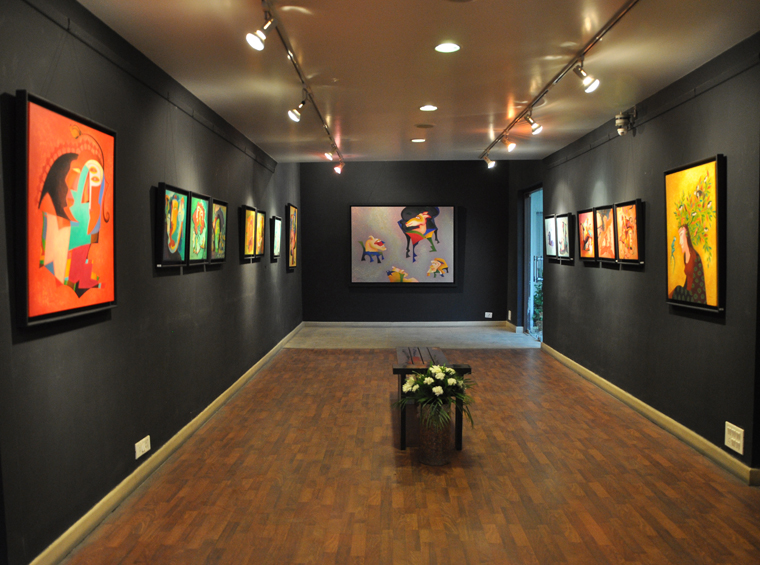
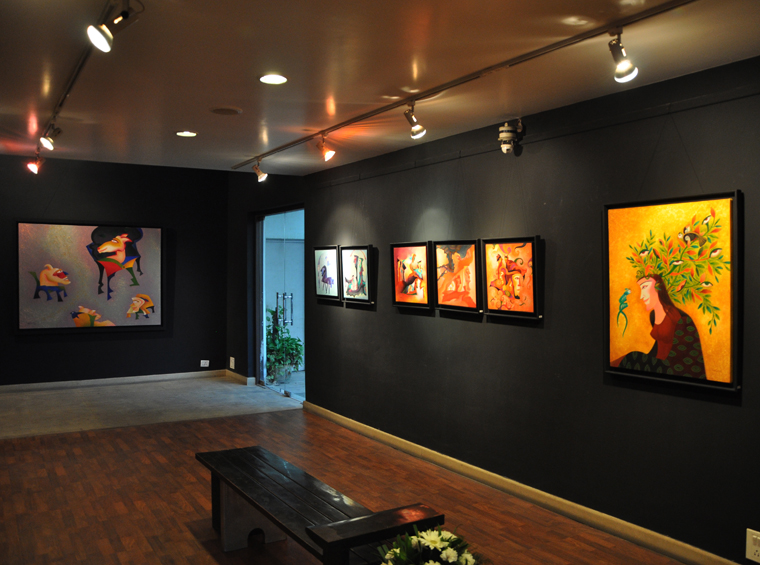
On all evidence Vandana is trying to steer clear of excess either way. Images from the Indian past revisit the painter’s otherwise contemporary idiom. The past, in especial that which by the processes of refining has been turned into the eloquence of artistic communion is the counter-point to her work. Thus the artist is able to carry along with her the reality of a key cultural tradition.
So the painter reconciles the dual attractions of art and ideal reality with skill. She cannot therefore be accused of replacing the poetry of invention with the prose of fact. In this way her art is bridge between worlds.
The work vacillates between the earlier art of affect, and that of the exactitudes of the physical eye, such as the academics represented. This distinction may be expressed in terms of what may be called the subjective or objective artistic intellect. The ‘objective’ intellect being one which is eminently impersonal, and the ‘subjective’, equally personal. The former disengaging itself as much as possible from its own prepossessions and striving to represent objects as they exist; the other viewing all objects in the light of feelings and preconceptions. Of course, it is needless to add that no artistic mind can be exclusively ‘objective’, nor exclusively ‘subjective’.
But every mind and every culture has a more or less tendency in these directions. This artist so fas as one can see, works her way from an idea downwards, proceeds deductively, starting from some ideal conceptions, and seeking in realities visible illustrations of time-tested existences.
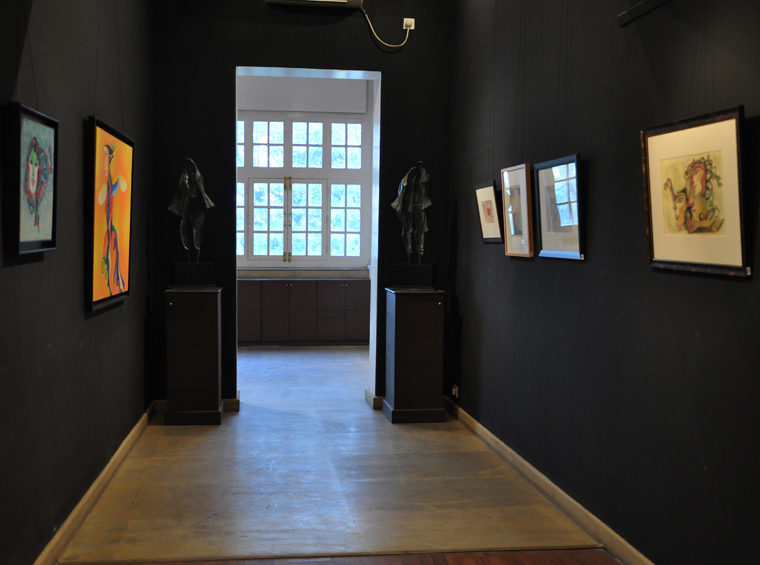
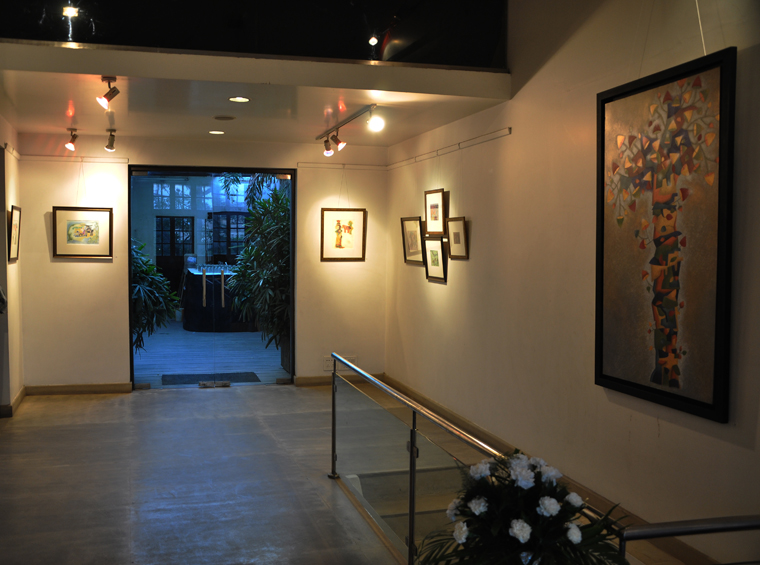
I do not want to bear on the various artistic strategies she has used to realize her vision. Suffice to say that she has by now a mastery of many media. The range of images that are introduced in each of her works is impressive. She brings a bit of art-craft lore to our doorsteps, but only as experience. Here, in other words, is a corpus of work, which even as it may charm the eye, equally provides a local cultural anchor. The artistic images and gestures, and much else besides, offer the profile of a wholesome, once living, life attitude. It covers a wide range of culture, inner and outer. Via the genre, we certainly become conscious as to how life can be at once strange and yet convincing. Vandana expresses the same objectively. In this way she is not merely expressing a narrow self, but attempting spiritual culture in its ideal aspects. And why not? The works value should grow, given the artist’s critical discipline brought to a higher point of keenness.
Keshav Malik
Read more